
Launch fast, learn smart: the product analytics survival plan
How to manage stakeholder expectations, build trust with your data, and turn raw telemetry into actionable insights - all in the first 21 days

Releasing a new digital product — whether it’s a new journey, feature, or entire experience — is an exciting milestone. But it also brings pressure. As soon as the product goes live, senior leadership and stakeholders want to know: “How is it doing?”
That’s where a thoughtful analytics launch plan becomes critical. This article lays out a practical, expectation-managed approach to product analytics, broken into Pre-Launch, Launch, and Post-Launch phases.
📌 Why Have an Analytics Launch Plan?
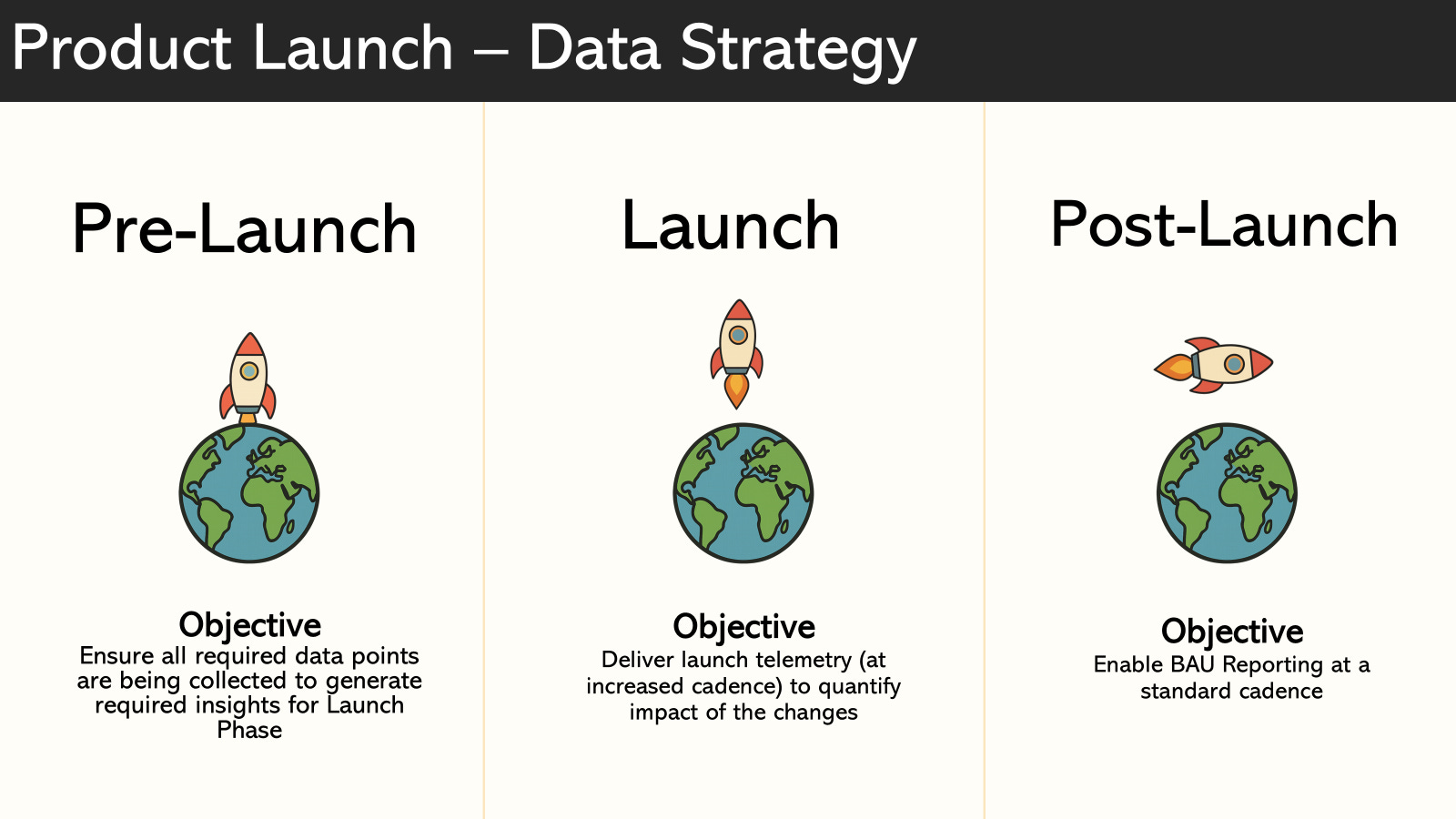
You can’t answer leadership questions with confidence if you haven’t prepared your data readyness ahead of time. Stakeholders will expect performance numbers quickly — but high-quality insight requires a balance of speed and stability.
This plan helps manage expectations while giving your team the structure to go from raw data → trusted insight → business-as-usual reporting.
🧠 Phase 1: Pre-Launch – Prepare Your Telemetry
Objective:
Ensure all data points are defined, tagged, and validated to generate the right insights once the product goes live.
This is your prep work. It sets the entire product analytics lifecycle up for success.
Key Activities:
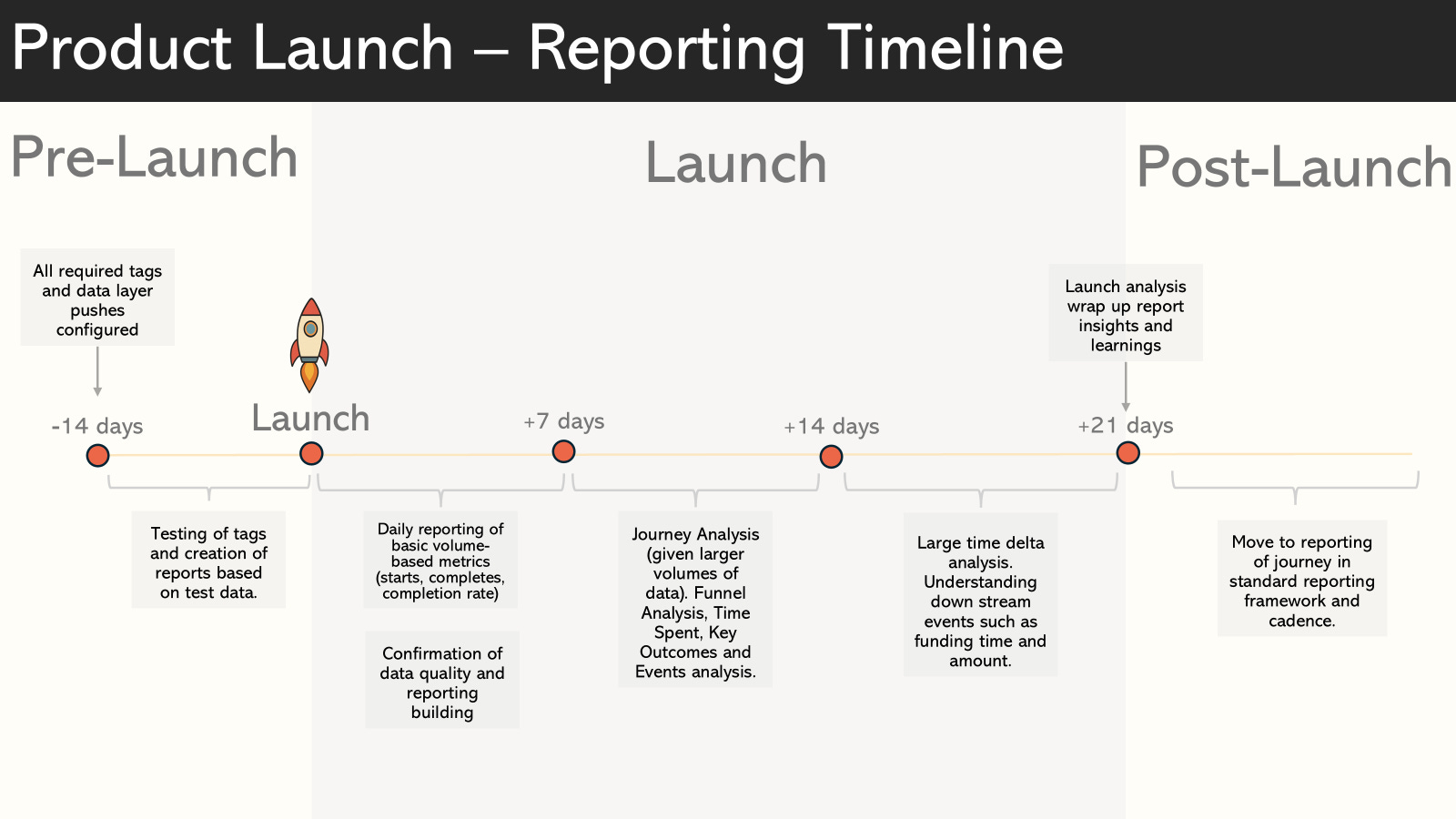
Configure Tags and Data Layers (D-14):
All interactions — page views, clicks, submissions, completions — must be trackable via tags or SDKs.Define Metrics & Reporting Structure:
Decide what success looks like (e.g. conversion, funding time, time-on-task). Draft your reporting templates and determine cadence (daily → weekly → monthly).QA & Test Reporting:
Run simulations and check:Are events triggering?
Is data clean and complete?
Do reports populate accurately?
Output:
✅ Fully tested tagging
✅ Defined KPIs and events
✅ Launch-ready reports and dashboards
🛫 Phase 2: Launch – Measure the Moment
Objective:
Deliver telemetry at increased cadence and build trust through quick, visible insights.
This is the most sensitive window — a 2–3 week “reporting runway” that bridges between launch chaos and stable cadence. You’ll be fielding questions fast, often before meaningful volume has arrived. That’s why expectation management is key.
What to Expect:
💬 “How’s it performing?”
💬 “Do we have any conversion data yet?”
💬 “Can you send me some early numbers?”
Key Actions:
✅ Day 0 – Go Live
Verify all data flows: tagging, dashboards, back-end syncing.
Provide initial confidence metrics (e.g. volume of visits, form submissions).
Let stakeholders know what will be reported and when.
✅ Days 1–2 – Early Assurance
Share basic volume numbers:
Visits
Conversions
Completion rates
Call out any anomalies or tagging gaps.
Reinforce that insight depth will improve over time.
✅ Week 1 – Foundational Reporting
Begin daily reporting with visualizations.
Confirm data quality.
Provide narrative context (e.g. "80% of starts are completing the flow").
✅ Week 2 – Journey & Funnel Analysis
Perform deeper analyses:
Funnel drop-off points
Time spent per step
Event correlations
✅ Week 3 – Time-Delta and Outcome Analysis
Analyze lagging outcomes (e.g. time to funding).
Package all findings into a Launch Wrap-Up Report.
Output:
✅ Daily dashboards and updates
✅ Clear timeline for deeper insights
✅ Launch retrospective with learnings & recommendations
📈 Phase 3: Post-Launch – Transition to BAU
Objective:
Enable standard cadence reporting (weekly or monthly) and embed insights into the product lifecycle.
After the initial three-week runway, reporting should become predictable and self-serve. This is when you scale your insights sustainably.
Key Activities:
Standardize Dashboards:
Set weekly or monthly cadence. Include trendlines, segments, and comparisons.Automate What You Can:
Use tools like Looker, Power BI, or Tableau to schedule report delivery.Embed with Product Teams:
Assign KPI ownership to squads. Build in review rhythms — e.g., “Metrics Monday” or “Feature Friday” sessions.Iterate Based on Data:
Use launch insights to shape A/B test hypotheses, refine UX, or prioritize backlogs.
Output:
✅ Reliable BAU reporting
✅ Stakeholder alignment on metrics
✅ Continuous optimization loop
💡 Final Thought: It’s All About Trust and Timing
Launching a product isn’t just about the technical release — it’s about the narrative you build through data.
A structured analytics plan helps you:
Respond to leadership quickly,
Deliver trusted insights confidently,
And transition smoothly into long-term value tracking.
By managing expectations and ramping up data maturity over the first 21 days, you’ll go from “What’s happening?” to “Here’s what we’ve learned — and what we’ll do next.”